
To tap into the growing demand for offices, several global and Indian co-working entities are creating stock in the top cities.

Such a high level of WPI was last recorded in October 2012, when inflation was 7.4 per cent.

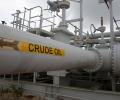
The wholesale price-based inflation rose to a four-month high of 14.55 per cent in March, mainly due to hardening of crude oil and commodity prices, even though vegetables witnessed easing of price pressures. As per the government data released on Monday, WPI inflation has remained in double digits for the 12th consecutive month beginning April 2021. The last time such a level of WPI was recorded was in November 2021, when inflation was 14.87 per cent.

Riniki Bhuyan Sarma, the wife of Assam Chief Minister Himanta Biswa Sarma, has filed a Rs 10 crore defamation suit against Congress MP Gaurav Gogoi for 'false' allegations of irregularities in a food processing project.

Mukherjee said uncertainty was still there on oil prices front due to unrest in West Asia and North Africa.
The wholesale price-based inflation surged to more than a decade high of 14.23 per cent in November, mainly due to hardening of prices of mineral oils, basic metals, crude petroleum and natural gas. WPI inflation has remained in double digits for eight consecutive months beginning April. Inflation in October this year was at 12.54 per cent, while in November 2020 it was at 2.29 per cent. "The high rate of inflation in November 2021, is primarily due to rise in prices of mineral oils, basic metals, crude petroleum & natural gas, chemicals and chemical products, food products etc as compared to the corresponding month of the previous year," the commerce and industry ministry said in a statement on Tuesday.

After defence, the Commerce and Industry ministry has started the exercise to relax foreign investment norms in the railways sector by permitting 100 per cent FDI in high-speed train systems and dedicated freight lines.

The key sectors that received the maximum foreign investment during the nine months of the fiscal include services, computer software and hardware, telecommunications, chemicals, and the automobile industry.

The government, in February, had released the draft national e-commerce policy proposing setting up a legal and technological framework for restrictions on cross-border data flow and also laid out conditions for businesses regarding collection or processing of sensitive data locally and storing it abroad.

Total foreign direct investment (FDI) inflow to India declined to $74.01 billion in the calendar year 2021, which is 15 per cent lower from $87.55 billion recorded in the previous year, the ministry of commerce & industry said on Wednesday. The FDI inflow includes equity inflow, equity capital of unincorporated bodies, re-invested earnings and other capital. "FDI is largely a matter of commercial business decisions and FDI inflow depends on a host of factors such as availability of natural resource, market size, infrastructure, political and general investment climate as well as macro-economic stability and investment decision of foreign investors.

The grievance redressal mechanism of many big e-commerce players is not up to the mark as the number of complaints received by the National Consumer Helpline has risen sharply over the last four years, Consumer Affairs Secretary Rohit Kumar Singh said on Thursday. Addressing an event organised by the Public Affairs Forum of India (PAFI), Singh said the number of complaints registered on the National Consumer Helpline (NCH) has gone up to 90,000 in November compared to 40,000 in the same month last year. "Four years back, the number of complaints pertaining to e-commerce transactions was 8 per cent of the total complaints.

FDI equity inflows into the country during April-January 2020-21 grew by 28 per cent to $54.18 billion, according to the Commerce and Industry Ministry data released on Monday. Foreign direct investment (FDI) inflows during April-January 2019-20 stood at $42.34 billion. Total FDI (which includes reinvested earnings) during the 10-month period in FY21 increased by 15 per cent to $72.12 billion over the year-ago period.

Foreign direct investment into India increased by 60 per cent to $4.44 billion in April as against $2.77 billion in the same month last year, government data showed on Wednesday. Total FDI, including equity, re-invested earnings and capital, rose 38 per cent to $6.24 billion in April this year, as against $4.53 billion in April 2020, as per the data. "During April, 2021 FDI equity inflows amounting to $4.44 billion were reported in the country which is an increase of 60 per cent over the FDI equity inflow of April, 2020 ($2.77 billion)," the commerce and industry ministry said in a statement.

Nirmala Sitharaman on Wednesday assumed charge as the Finance and Corporate Affairs Minister for the second consecutive term and is slated to soon present the final Budget for FY '25 that is going to set the tone for the Modi 3.0 government's priorities and direction for Viksit Bharat. Upon her reaching the North Block office, Sitharaman was greeted by Finance Secretary T V Somanathan and other top officials. Minister of State for Finance Pankaj Chaudhary was also present. Chaudhary assumed charge on Tuesday evening.

For the consumer, there would be practically no impact on prices of essential medicines this year.

The proposed e-commerce rule book issued recently by the ministry of consumer affairs does not mention foreign companies or foreign direct investment (FDI) at any place, unlike most other government guidelines for the sector so far. That is a heartening development since the latest proposals could be fine-tuned as e-commerce policy.
The government is considering a proposal to allow 100 per cent foreign direct investment into the country's defence sector, despite stiff opposition from the defence ministry that has raised security concerns.

The reshuffle could take place before the start of the winter session of Parliament.

However, WPI inflation remained in double digit for the third consecutive month in July, mainly due to a low base of last year. WPI inflation was (-) 0.25 per cent, in July 2020. "The high rate of inflation in July 2021 is primarily due to low base effect and rise in prices of crude petroleum and natural gas; mineral oils; manufactured products like basic metals; food products; textiles; chemicals and chemical products etc as compared the corresponding month of the previous year," the commerce and industry ministry said in a statement.

Imports too tumbled by 58.65 per cent to $17.12 billion in April from $41.4 billion in the same month last year, according to the data by the commerce and industry ministry.

The state had received six proposals from IT companies for setting up units here involving an investment of Rs 1,410 crore (Rs 14.1 billion, Chatterjee said, adding that these proposals would entail direct employment to 19,000 people and indirect employment to 125,000.

In a meeting with the commerce minister, India Inc hammered Sharma on the collapse of investments, structural nature of the current account deficit and stagnant growth in agriculture.

A combination of externalities such as global trade wars and slowing growth, continuing glitches in accessing offsets under the GST regime, which has created a liquidity crunch for smaller exporters, and the growing competitiveness of smaller countries are causing the slowdown.

Over 65 Union ministers are likely to take oath, going by the visual of the meeting Modi held with his likely council of ministers.

Foreign direct investment (FDI) in India has increased by 16 per cent year-on-year to $27.1 billion during April-August this year, the Commerce and Industry Ministry said on Tuesday. During April-August last year, India had received FDI worth $23.35 billion. The ministry said that the total FDI, which includes reinvested earnings, grew by 13 per cent to $35.73 billion.

The output of eight core sectors declined by 4.6 per cent in February, the steepest contraction in the last six months which experts said could drag the overall industrial production in the month into the negative territory. All the key segments, including coal, crude oil, natural gas, and refinery products, witnessed a decline in production, according to the official data released on Wednesday. The growth rate of the eight infrastructure sectors -- coal, crude oil, natural gas, refinery products, fertilisers, steel, cement and electricity -- stood at 6.4 per cent in February 2020. Last time in August 2020, the sectors had recorded a negative growth of 6.9 per cent.

Sectors which attracted maximum foreign inflows during April-June 2019-20 include services (USD 2.8 billion), computer software and hardware (USD 2.24 billion), telecommunications (USD 4.22 billion), and trading (USD 1.13 billion), the commerce and industry ministry data showed.
Deficit is likely to touch $60 bn this financial year from $40 bn in the previous one.

The government on Wednesday unveiled the FTP for 2015-20.

Snapping the two-month easing trend, WPI inflation rose in August and remained in double-digit for the fifth consecutive month. In July 2021, WPI inflation stood at 11.16 per cent. In August 2020, WPI inflation was at 0.41 per cent. "The high rate of inflation in August 2021 is primarily due to rise in prices of non-food articles, mineral oils; crude petroleum and natural gas; manufactured products like basic metals; food products; textiles; chemicals and chemical products etc as compared the corresponding month of the previous year," the commerce and industry ministry said in a statement.
The commerce and industry ministry is in talks with state governments to prepare guidelines for setting up local governance bodies inside these tax-free industrial enclaves. Sources said these bodies may either be modelled on the lines of townships developed by state industrial development authorities like the New Okhla Industrial Development Authority (Noida) in Uttar Pradesh, or follow a Jamshedpur-like model, where a corporate house takes care of civic infrastructure.

Key sectors that received maximum FDI include services, computer software and hardware, telecommunications, trading, chemicals, and automobile.

External Affairs Minister Salman Khurshid on Tuesday said his ministry is contemplating a plan to have people from industry on-board to facilitate on issues relating to economic diplomacy.

Exports of electronics goods has risen by 24 per cent from April to November as compared with the same period in the last fiscal, the largest increase out of India's top 10 export categories. The increase has been propelled by mobile exports under the Production Linked Incentive (PLI) scheme and has pushed electronics up from sixth to fifth position in the top 10. A gap of $200 million separates electronics from occupying the fourth position, currently held by drugs and pharmaceuticals at $17.9 billion.

The output of eight core sectors grew by 16.8 per cent in May, mainly due to a low base effect and uptick in production of natural gas, refinery products, steel, cement and electricity, official data released on Wednesday showed. The eight infrastructure sectors of coal, crude oil, natural gas, refinery products, fertilisers, steel, cement and electricity had contracted by 21.4 per cent in May 2020 due to the lockdown restrictions imposed to control the spread of the COVID-19 infections. In March this year, these key sectors had recorded a growth of 11.4 per cent, and 60.9 per cent in April.

Federation of Pakistan Chambers of Commerce and Industry President Zubair Ahmed Malik also said that the negative list should also be pruned to boost bilateral trade with India.

The commerce and industry ministry is not in favour of allowing foreign airlines to buy stake in Indian carriers on the ground that the sector is sensitive.

The Supreme Court on Friday said lawyers and professionals with 10 years of experience will be eligible for appointment as president and member of the state consumer commission and district forums.

Coal, natural gas, refinery products and cement grew by 16 per cent, 7 .4 per cent, 2.7 per cent, and 16 .6 per cent in April this year, respectively.
